Tuesday, February 16, 2016

SF Jazz Club Finds New Home in San Carlos

Screenshot 2016-02-16 16.29.13
Savanna Jazz located at 1189 Laurel Street (formerly Clooney's)
Savanna Jazz, a club that operated out of the Mission District in San Francisco for 12 years, has has packed up and moved to Laurel Street in San Carlos.  Live music isn't currently permitted at the new location, but owners Pascal Bhokar Thiam and Vicky Lawlor are seeking a conditional-use permit from the city to allow live entertainment until 11 pm.  It will be up for approval from the Planning Commission this evening, and city staff is recommending approval.
The site in question is currently permitted for use as a bar, having been previously occupied by Clooney's.  As such, over the past few weeks Savanna Jazz has been open and running as a sports bar pending approval of their conditional use permit.  They already have a slew of live events advertised on their website - including some scheduled for this weekend).
Pascal Bokar is a renowned jazz musician and composer himself, and currently works as the director of the jazz band at the University of San Francisco.  He's scheduled to perform at Savanna Jazz this Friday and Saturday night @ 8pm - stop by and check it out!

Wednesday, February 10, 2016

2015 Mid-Peninsula Market Review

As you'll see in the charts below, inventory fell off across all mid-peninsula cities at the end of 2015.  Now, a little over a month into 2016 and not much has changed.  Since December '15, the number of active listings has only jumped from 17 to 20 in San Mateo, 4 to 5 in Foster City, 3 to 6 in San Carlos, and 20 to 26 in Redwood City.  Inventory actually dropped over that same time period in Menlo Park (13 to 10), and Belmont (3 to 2).   

Redwood City saw it's first real jump in inventory last week - up to 26 from 20 the week prior.  Hopefully this trend continues through February and into March.


SAN MATEO


BELMONT

FOSTER CITY

SAN CARLOS

 REDWOOD CITY

 MENLO PARK

Friday, February 5, 2016

Super Bowl Sunday Open Houses

4207177051_938dfee197_o

Not everyone is a foot ball fan and watching the "big game" this weekend. Here is the list of properties that are having open houses this weekend in Redwood City. If you would like to see the list of open houses for another city, please let me know and I can get it out to you.


http://search.mlslistings.com/DE.asp?k=527119XP6QX&p=DE-38202665-493

Friday, January 15, 2016

RWC Keys in on Affordable Housing for Future Growth Along El Camino

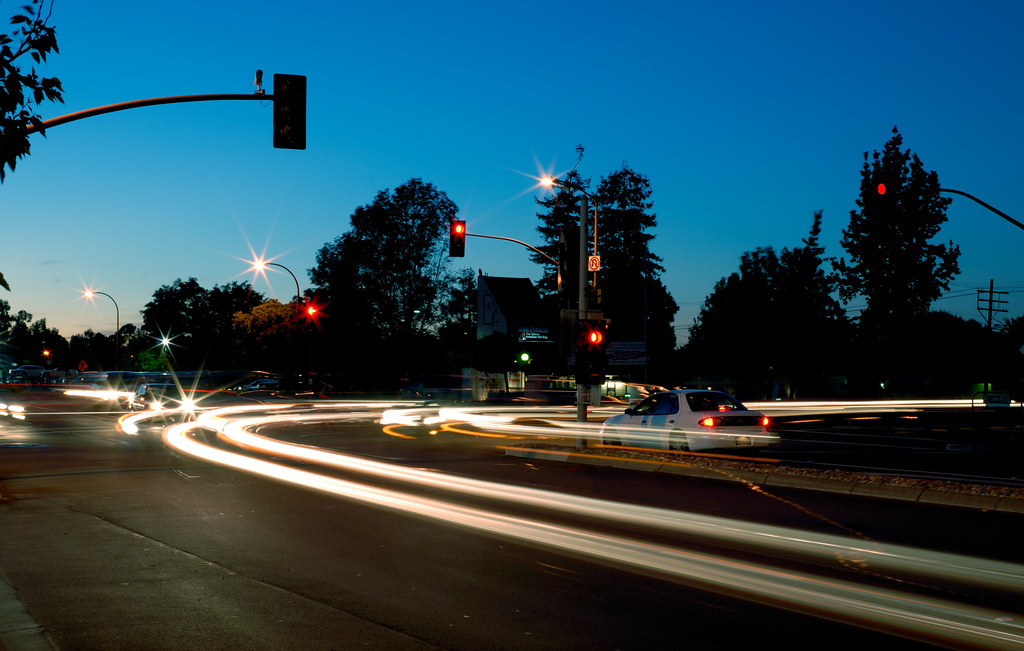
light trails by (nz)dave, on Flickr
Photo by, Flickr user, (nz)dave 
With Redwood City's Downtown Precise Plan unfolding right before our eyes, the planning commission has decided to turn their attention towards one of the city's most important transit corridors.
City Council approved a consultant agreement this past Monday to prepare a plan for future growth along El Camino.  They entered into a $195,604 contract with San Francisco based urban planning firm, Dyett & Bhatia, to create the El Camino Real Corridor Plan, which could take as long as 18 months to complete.
According to Vice Mayor, Ian Bain, "this is not a plan to build big buildings. It’s about best uses and improving the overall look and feel of the corridor. El Camino can be a visibly much better looking street.”  Bain assured that a primary focus of growth along the plan will be increasing the supply of below market rate housing, adding that any housing that will be built, will be done in a manner that is "sensitive, height appropriate and doesn’t bring more traffic".
A major criticism of the 2011 Downtown Precise Plan has been that it invited a huge wave of development - both commercial and residential - yet hardly accounted for any below market rate housing.  Rents have risen to unbearably high levels for some residents, and many attribute this to overgrowth brought about by the precise plan.  No significant portion of the newly built housing units are offered at below market rate.  This time around, city council is insisting that affordable housing is at the center of their planning efforts.
Small business retention, traffic mitigation, and pedestrian/bicycle safety will also be among the top concerns throughout the planning process.  With regards to traffic mitigation, Mayor John Seybert has said that Caltrain and SamTrans should be a part of the solution.
Residents will not be without a voice in the planning process.  A community advisory committee will be established to give the people who live along the El Camino Corridor an opportunity to help shape the plan.
According to the San Mateo Daily Journal, the plan could include:
• A form-based code that focuses on design and architecture. The form based code would work within the existing maximum height standards (no intensification beyond existing zoning standards will be proposed);
• Emphasis on housing opportunities with a focus on providing affordable housing;
• Connections and interface with the Downtown Precise Plan;
• Opportunities for implementing the city’s Community Benefit (Partnership RWC) program;
• Implementation of public improvements to enhance appearance and functionality of El Camino Real;
• Design guidelines for future projects; and
• A comprehensive small business preservation and development strategy.

Monday, January 11, 2016

Redwood City Welcomes First Wave of Box Employees

One of Box's buses parked on Winslow St.
in Downtown RWC
Basically overnight, Box Inc. has become downtown Redwood City's largest private employer.  The content and online file sharing company has settled about 950 employees into the recently unveiled Crossing/900 development, with plans to move in as many as 1,800 total employees over the next few years as their workforce continues to grow.  Their move from Los Altos (which took place over the Thanksgiving weekend) is a landmark moment in Redwood City's downtown transformation.
Currently, Box leases the entire 330,000 S/F of office space at Crossing/900, but does not immediately plan to occupy all of it.   For now, they are sub-leasing about a third of it to three other tenants: Pebble Smartwatch, the shopping app shopkick, and the Wealthfront Investment Service.  The leases will expire in stages over 3 years, allowing more "Boxers" to gradually take their place.
With nearly 1,000 new workers making their way to downtown Redwood City Monday-Friday, there are obvious concerns about increased traffic.  In theory, the effects should be minimal.  A major reason Box picked Crossing/900 as their new home was for its proximity to the Redwood City Caltrain station.  Company spokespeople have emphasized that they are committed to mass transit, and their actions seem to reflect as much.  They provide their employees with free annual Caltrain passes upon request,  and run a shuttle service taking employees to and from San Francisco (about 1/3 of their workforce lives in San Francisco).
As far as parking is concerned, the 900+ spaces included in the Crossing/900 development should be plenty to accommodate the Box employees who don't take public transit.  These parking spaces are also available to the public on nights and weekends.

The front of the new Box headquarters looks right down Theater Way.
Photo courtesy of Ana Santos/Peninsula Press
The obvious upside to bringing so many new people to Redwood City on a daily basis is that downtown businesses should see a general increase in patronage.  Whether it be restaurants during the lunch/dinner hours, bars during happy hour, or retail as newcomers become acquainted with the storefronts, all downtown businesses stand to benefit from Box's presence.  With that being said, there is something that may limit the number of trips Box employees make to downtown restaurants in the early going.  That's the "Lunch Box" - a cafeteria located on the 2nd floor of the headquarters offering Boxers a wide variety of free meal options, including a pho bar, pizza, vegan cuisine, and more.  The hope is that once the thrill of free in-house meals fades, employees will start to make their way downtown a couple times a week in search of something new to eat.
For better or for worse, the identity of Redwood City has been altered, and the vision set forth by the Downtown Precise Plan in 2011 has taken form.  A town which at one point in time was oft referred to as "Deadwood City", has become a bustling hub of commerce and entertainment, with the Silicon Valley workforce as an integral part of its culture.
The new Redwood City is bound to be met with resistance by some long-time residents, as most change usually is.  But as time goes on, hopefully we will all reap the rewards of a more vibrant, thriving downtown.

Tuesday, December 15, 2015

Stanford to Break Ground on RWC Campus Fall '16

Screenshot 2015-12-15 15.46.22
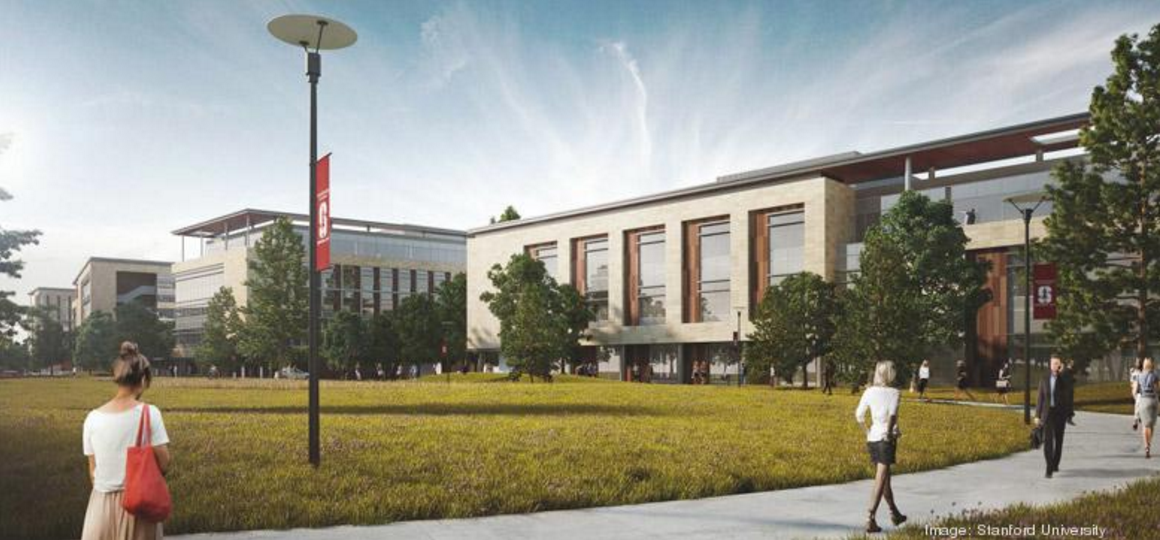
Stanford University's Redwood City campus is one step closer to becoming a reality.  Last week, the Board of Trustees approved design plans for the 1.5 million S/F campus, and will submit them to the City of Redwood City for design approval by early 2016.
The Redwood City campus will be the University's first significant expansion outside of the main campus. It will be home to around 2,300 Stanford employees in such critical areas as the Graduate School of Business; School of Medicine administration; Stanford Libraries and University Archives; the major administrative units of Business Affairs; Lands, Building and Real Estate; University Human Resources; Residential & Dining Enterprises; and the Office of Development.
Richard Livingston, Stanford University's CFO/VP of Business and Affairs, will be among the 2,300 faculty making the move to Redwood City.
Screenshot 2015-12-15 15.50.42
Stanford purchased the Midpoint Technology Park back in 2005 as a part of their plan for future growth.  Now a decade removed from the purchase, it appears the future has arrived.  The 35-acre site, located at the old Midpoint Technology Park on 405 Broadway, will be home to:
-High-end fitness center with a pool
-Modern child care center
-Cafes and a food pavilion
-A town square that will serve as the civic heart of the campus
-Ample parking
-Open spaces and attractive landscaping
-State-of-the-art buildings with ample light and views
-Areas for collaborative working and conferencing
-BeWell programs
-Shuttle service and traffic management programs
"Stanford's Redwood City campus will be infused with the ethos of the main campus, drawing from programmatic, cultural and design attributes", said David Lenox, the University's architect. "It will feel like Stanford. Covered arcades along the greenway connecting buildings and landscaped spaces; the use of warm, high-quality building materials in the Stanford palette; and spaces for active and passive recreation are just a few examples."
Redwood City already approved Stanford's development plan back in 2013 (which includes $15.1 million towards public benefits), as well as the accompanying environmental impact report, and community benefits package.   Assuming the city approves this recently unveiled design plan, the project's groundbreaking is tentatively set for the Fall of '16, with the first phase of construction being completed in 2019.

Wednesday, December 9, 2015

New Supreme Court Ruling Could Prohibit Use of Open House Signs


As a real estate salesperson trying to direct open house traffic to your listing, one of your most effective tools is the A-frame sign (the signs you see propped up on street corners every weekend pointing in the direction of open houses).  At busy intersections you might even see 3 or 4 from different brokerages.
In addition to helping funnel buyers into your open houses, A-frames are also a way for brokerages to build brand recognition.  They are usually emblazoned with your company logo and colors, so even when passerby aren't headed to your open houses, the signs and your company gradually become familiar.
However, due to a recent Supreme Court ruling, the right to display these signs on public property may be in jeopardy.  The ruling states that any sign regulation passed by a city government must be content-neutral, meaning restrictions can be placed on the placement, type, or size of a sign, but not on it's message.  As a consequence of this ruling, any municipality with an active sign code will be forced to re-evaluate the regulations to ensure they are content neutral.
This puts the use of open house signs in jeopardy because many cities permit their use only through an exemption to their sign code.  Upon re-evaluation, these exemptions will likely be seen as non-content neutral, leaving city lawmakers with two options:
1) Grant the right to place directional signs to everyone, not just real estate brokerages.  This means gun shops, liquor stores, adult entertainment stores etc.
2) Throw out all sign exemptions so that no businesses can display directional signs.
The second choice would be the easier, so many cities are likely to go that route barring some lobbying from Realtor Organizations.  The Supreme Court ruling does leave room for exemptions to a sign code if the exemption serves a compelling government interest, and Realtor Organizations will likely use this as the grounds to their lobbying since the Supreme Court has in the past cited open house signs as an asset to fair housing practices.
One thing is for sure: RealSmart Properties, and other brokerages across the nation, will be waiting eagerly to see how this all plays out at the local level.  We rely heavily on A-frame signs, especially when we have listings in areas that can be tough to navigate like Emerald Hills.