Wednesday, April 15, 2015

Combat the Drought With Synthetic Lawns

The California drought is the real deal folks, and it's well past time we start thinking about the sacrifices we can make to lessen our footprint on the crisis.  A while back I wrote a blog that discussed a few simple ways to make your home more water efficient.  And while the suggestions made in that blog are still great ways to conserve water, this time around I'm going to recommend doing something that will require you to step a little farther out of your comfort zone.  I'm talking, of course,  about replacing your beautiful natural lawn, with artificial turf!  I know that's a tough pill to swallow, but keeping your lawn healthy and green in dry weather uses an exorbitant amount of water, and now is the time to start exploring alternatives.
Please Note: For copyright reasons, I was unable to find any good pictures for this blog.  To see some beautiful synthetic lawn landscaping, head to the SynLawn Website.

FACT: Not all artificial turf looks like the elementary school field that you take your kid to play soccer on every Saturday.  Those fields, distinguished by their short strands and the mounds of black rubber crumbs that pile up in your shoes as you walk across them, were not designed with landscaping in mind.  When synthetic turf first became popular, it was almost exclusively used for sports fields (football, baseball, soccer).  The black rubber infill that you commonly see in those fields was designed to ballast the blades so they could withstand heavy traffic, while also providing extra fall support for athletes.  It was NOT designed to look aesthetically pleasing.
Within the last decade or so, artificial grass manufacturers realized that drought and high water costs were creating a growing demand for their products in landscaping.  They also realized that there was really no place for their rubber-crumb infill in these applications.   So they started developing infill that was more aesthetically pleasing, and of a finer consistency (to keep it from coming to the surface and making a mess).  Further, to make it look less like a big green carpet, the synthetic turf that's used for landscaping typically comes with varying strand length and color.  (Click here to see the various styles of turf offered by SynLawn, a leader in the industry)
The bad news about synthetic lawns is they are not cheap up front.  They can end up costing you as much as $20 per square foot to have professionally installed.  You can get them a bit cheaper, but to get your lawn looking as natural as possible, you're going to want to pay for the good stuff.
The good news is that in the long run, synthetic lawns save you a ton on your water bill and constant maintenance.  Also, some of the installation costs of synthetic lawns can be offset through rebate programs offered by local governments.  The Bay Area Water Supply and Conservation Agency for example, offers $1-$4 for a every square foot of water thirsty landscaping that is replaced with drought friendly landscaping.  Follow this link to learn more about this program, and whether or not your local government participates in it.
Of course, the biggest benefit of replacing your natural lawn with an artificial one is the peace of mind you get from knowing that you are doing your part to combat the drought.
DISCLAIMER:  Installing synthetic turf isn't the only, or even necessarily the best way to make your landscaping drought friendly.  The point of this blog is simply to shine some light on the fact that the "Astro Turf" most people are used to seeing isn't anything like the turf that is available today for landscaping, and so synthetic turf shouldn't be overlooked when exploring drought friendly landscaping.

Wednesday, April 8, 2015

Days After Completion of New Campus, Facebook Proposes an Additional Million S/F in Office Space

Facebook is back at it.  Just days after the social media giant celebrated the grand opening of their new Frank Gehry designed campus, they submitted a request to the city for approval of two additional office buildings at the 58 acre site they purchased from TE Connectivity last year.
In a letter written to the city last week, Facebook's Director of Campus Facilities, Fergus O'Shea, stated, "We believe our project will positively transform this part of Menlo Park by converting a heavy-industrial site into a vibrant campus that fosters collaboration and innovation". These two new office buildings - also designed by Frank Gehry - would total 985,719 square feet. and according to Facebook officials would have a similar look, feel, and height to their new campus.  
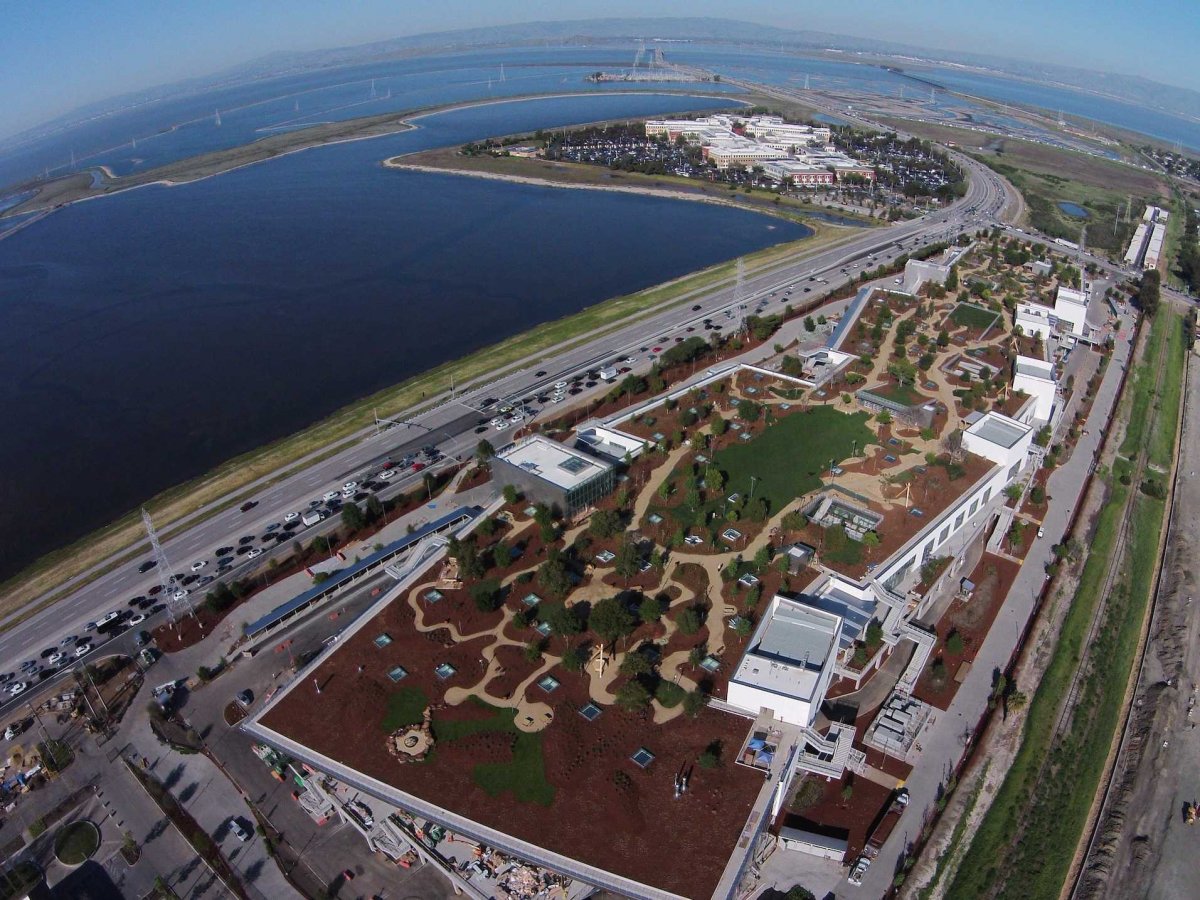
facebook-hqFacebook's new campus with rooftop park. The main headquarters can be seen across the street.
The new campus has a nine-acre rooftop park, complete with 400 trees that can be seen in the skyline as you drive by the facility.  Another building like that would certainly be an aesthetic improvement from the industrial facade of the TE Connectivity building.  Should the new buildings be approved, Facebook will demolish 9 of the existing buildings at the site.
Although this proposal is still awaiting approval, Facebook is already at work transforming the site.  In December of last year, they received approval from the city to convert an existing 184,460 square foot warehouse into office space.  This building is projected to be completed sometime in 2016.
But wait, there's more!  In addition to the two office buildings, Facebook is also proposing to build a new bridge over Bayfront Expressway for pedestrians and bicyclists, green space, and a 200-room "limited service" hotel that covers 120,000 square feet at the corner of Chilco Street and Bayfront Expressway.
These proposals come shortly after Facebook reached out to Menlo Park officials expressing interest in bringing more housing and retail to the neighboring Belle Haven  community, as well as activating the Dumbarton rail corridor - all of which are improvements that would benefit not only their employees, but Belle Haven residents as well.
Facebook has been receiving a lot of praise from city officials for being the model "corporate citizen", and going above and beyond the public services mandated as a condition of their continued development.  And it's true - Facebook is clearly conscious of the strain their rapid growth is putting on housing market in the surrounding communities.  It is part of the reason why they are helping fund the construction of a 394-unit apartment complex near their headquarters, and why they are offering to help bring thousands of additional housing units in the future.
It will be interesting to see what the Belle Haven community looks like a few years from now.  If Facebook delivers on even half of what they've suggested to the city, the area will be undergoing a serious transformation.
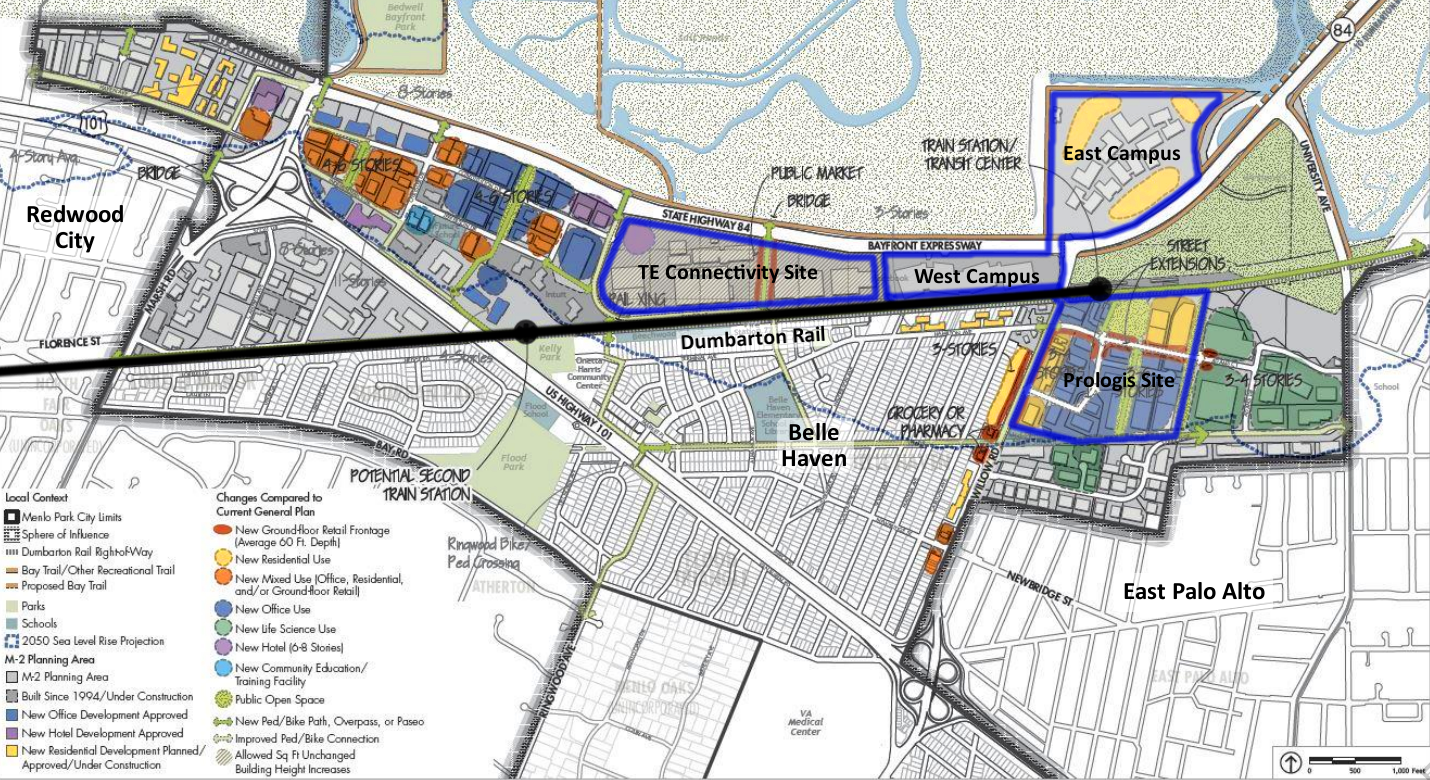
Facebook-Lands-Dumbarton-M2-Draft-General-Plan
A graphic of what the Belle Haven community could look like in the future.  Areas highlighted in blue are Facebook owned territories. Image provided by City of Menlo Park

Redwood City's Newest Apartment Complex Changes Hands, New Owner Has Corporate Guided Vision


Redwood City’s The Lane on the Boulevard has been sold and rebranded before most residents even knew that it was open for business.  The 141 unit luxury apartment community has been sold to Singapore based company Mapletree for $84 million, and is now operated by their partners at Oakwood Worldwide, a company that specializes in temporary corporate housing.  Although the complex is already ¾ leased out, Oakwood says they intend to use the remaining units as extended stay rooms for their corporate clients.  While they didn’t disclose who those clients might be, Oakwood did hint that they work with up to three-quarters of the Fortune 1000 companies.

The previous owner, SummerHill Housing, had already designed the complex to cater to a more upscale crowd.  The rooms, though small, come fully furnished with washer/dryer, walk-in closet, dishwasher, air conditioning, patio/balcony, and high speed internet.  There is also a community fitness center, pool, clubhouse, chef’s kitchen, spa, and outdoor fireplace.  Summerhill even took steps to clean up the surrounding areas. They bought out the lease on the adult bookstore across the street, had the area rezoned to make sure another one couldn’t open, and payed to landscape a neighboring Public Utilities Commission site so it wasn’t an eyesore to their tenants.

But beyond the obvious benefit of the complex already being tailored to their corporate clientele, Oakwood says they were particularly drawn to Redwood City as a new found hub of growth and activity in the Silicon Valley.  “There’s job growth and new jobs and migration in that area,” said Kristen Zimmerman, vice president of real estate investments for Oakwood Worldwide. “Redwood City was one of our ideal submarkets within Silicon Valley".

Redwood City's growth has been no secret.  Box Inc. signed a lease in downtown’s Crossing/900 Development, Google purchased six office buildings at the Pacific Shores Center, and the city has constructed more than 1,500 housing units since 2007 – more than any other city in San Mateo County, but still not enough to meet the growing demand. 

When you take into account the increasing presence of big name corporations and the stiff competition for housing in Redwood City, it should come as no surprise that a company like Oakwood Worldwide would want to secure some prime real estate for their clients.  Still, to anyone that gets nostalgic about the old Redwood City, this purchase could be disappointing.  The name “The Lane on the Boulevard” was an homage to Mel’s Bowl, the bowling alley that used to occupy the site of the new apartment complex.  With the changing of the name to Oakwood Redwood City, the only remaining trace of Mel's Bowl is their old sign that is proudly displayed in front of Redwood City Car Wash on El Camino.

Wednesday, April 1, 2015

Facebook Open New Campus, Invites Instagrammers to Take Photos

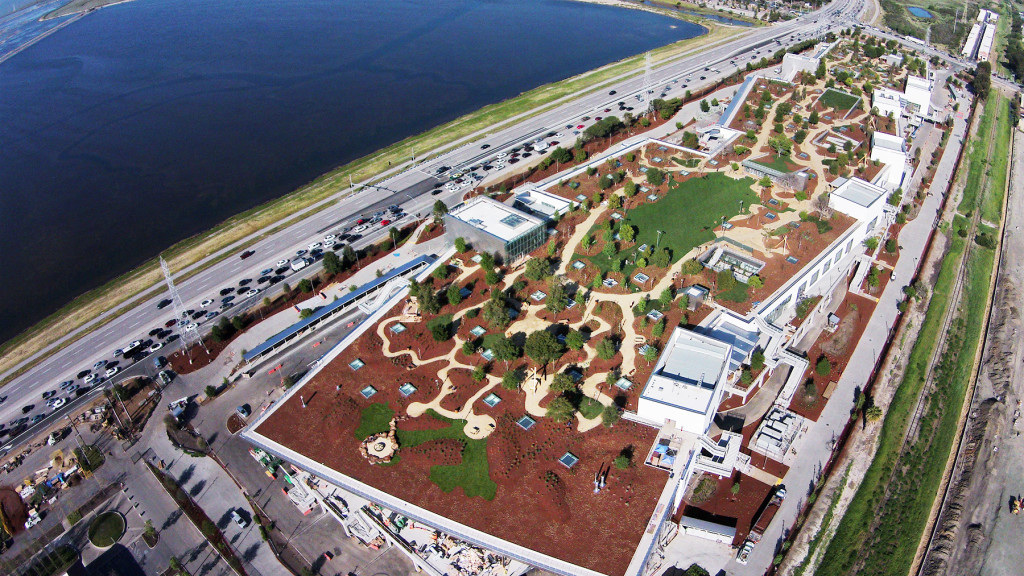
DCIM103MEDIA
Aerial view of Facebook's new West Campus and it's rooftop park
Facebook recently completed their new Frank Gehry designed campus right across the Bayfront Expressway from their current headquarters at 1 Hacker Way.  To celebrate the completion of this new building, 1 Facebook Way, they invited some of their favorite Instagrammers to shoot some photos.
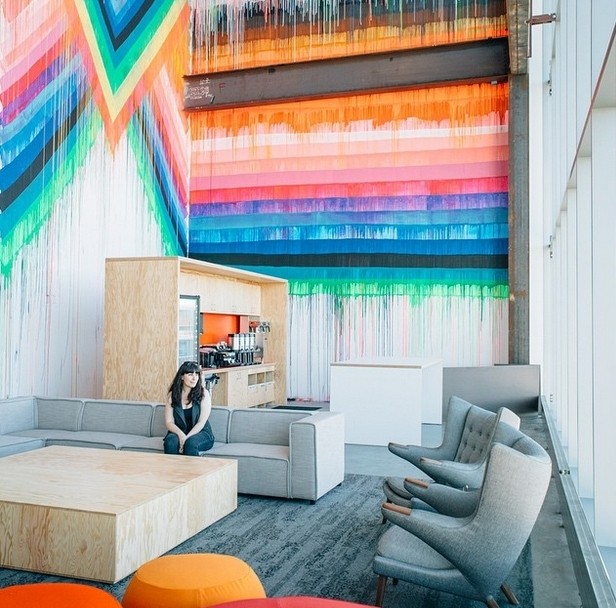
Facebook2
Photo by Instagram user, coryiander
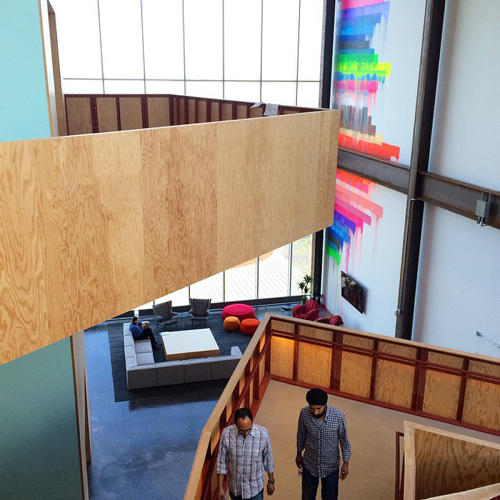
The building itself is pretty simple.  "That's on purpose", said Facebook CEO Mark Zuckerberg.  "We want our space to feel like a work in progress.  When you enter our buildings, we want you to feel how much left there is to be done in our mission to connect the world".  The interior features exposed support beams and plywood surfaces throughout and is essentially one big open floorplan, though there are private meeting rooms off to the side.
Weird Wall
Photo by Instagram user, @alissa_isms
In this case, 'simple' does not equate to boring or ordinary.  The interior is flush with custom artwork, and the roof consists of a 9 acre park, complete with a half-mile walking trail and somewhere around 400 trees.  The rooftop park not only gives employees a place to clear their heads, but it also saves energy by providing additional insulation to the building.
x
Rooftop park by night, Photo by Gehry Partners
The new campus is officially open for business, though Facebook says it will be sometime before their employees fully move in.  When it's all said and done the new facility will house around 2,800 employees.
z
Photo by Instagram user, lizardshep

Thursday, March 19, 2015

Board of Supervisors Shows Little Interest in Rent Control, Supports Other Proposals

Hopes of passing a rent control ordinance in San Mateo County were dealt a significant blow on Tuesday at the Board of Supervisor's meeting.  The Board showed little to no enthusiasm for the controversial topic, and suggested that even if they were to end up passing such an ordinance, it would only apply to about 2,000 units located exclusively in unincorporated County territories - mostly in North Fair Oaks, southeast of Redwood City.  They ultimately decided not to have any County staff research a rent control ordinance until they were presented with more information on how the policy would work, and precisely how many apartment units are located within these unincorporated territories.
The Board was presented with 10 other proposals on how to address the affordable housing crisis, many of which they did show support for.  These included establishing a county-wide tenants right's education program, legalizing unpermitted second units, and putting together a prototype program that offers pre-approved plans for tiny houses.
Some people who spoke at the meeting urged cooperation with tech companies like Facebook and Google to construct more affordable housing since it is their workers that are helping drive up rents.
Facebook is already helping to fund a 394 unit apartment complex in Menlo Park, and has reached out to the city expressing their interest in helping them fund thousands of additional units.  The company expects to add around 3,000 jobs at its new Menlo Park campus in the coming years.
Currently it is estimated that there is a 24,000 unit deficit of housing for low wage workers.
Housing officials will report back in June to review the progress that has been made in developing the ideas discussed at Tuesday's meeting.

Tuesday, March 10, 2015

Bohannon Development Secures Partner for Menlo Gateway Project

Bohannon Development
David Bohannon 2nd from left.
Developer David Bohannon announced last Thursday that he has found a company to build his long anticipated Menlo Gateway project in Menlo Park's Belle Haven neighborhood.  Bohannon Development Co. will be teaming up with Ensemble Hotel Partners to construct a 193,000 square foot hotel and three office buildings totaling 694,000 square feet.  The project is expected to begin construction early next year and could be done by 2018.
The hotel will be a part of Marriott's Autograph Collection, which is known for its upscale design that reflects the personality of each hotel's location.  It will feature a restaurant, poolside lounge, 40,000-square-foot fitness center, a chef driven restaurant, and a meeting space/outdoor event center.  The hotel design includes 250 rooms, which is 20 more than what was initially approved by the city a few years back, but the additional rooms will generate a projected $1.2 million more in yearly occupancy tax revenue.  Rooms are expected to go for around $400 per night.
Bohannon's plan for the Menlo Gateway Project initially began over 5 years ago, but until recently had been derailed by the economy.  In 2009 the hotel industry took a nose dive and Bohannon was having a hard time finding a company to develop the project.  Soon even Marriott became disillusioned with the whole idea and jumped ship.  Since that time, Facebook has accumulated about 3.5 million square feet and 200 acres of land in or around the Belle Haven neighborhood, making it much easier for Bohannon to convince prospective developers/Marriott that the hotel will be able to attract enough guests.  Facebook's presence in the immediate area coupled with the recent economic boom effectively took Bohannon's project off life support and elevated it from dud to stud in the eyes of developers.
It will be interesting to see what type of impact all of this activity has on the Belle Haven Community, which happens to be among the poorest on the peninsula.  So far Facebook has been good about providing public services to the area.  They have made significant contributions to the local schools, have been active in talks with the city about getting a full grocery store to the neighborhood, and plan on taking a mixed-use development approach at their most recent 56 acre purchase.  The Zuck himself has even taught a class on entrepreneurship at a local middle school.
Zuck
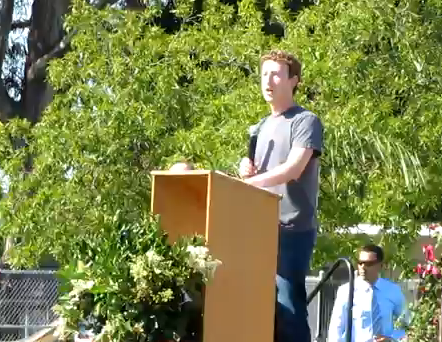
Mark Zuckerberg speaking at Belle Haven Middle School's 8th grade graduation
Still, the influx of money into the area is bound to lead to some level of gentrification.  Rents are already on the rise, and brand new townhomes have popped up on streets where the occasional gunshot can still be heard.  With any luck, the city will be able to find a way to clean up the Belle Haven neighborhood without displacing its current inhabitants.
Stay tuned for updates!


San Mateo County Set to Tackle Rent Affordability

Rent affordability in San Mateo County is becoming a serious issue, and pressure from residents and some city and county officials has led the Board of Supervisors to schedule a special study session to address the matter -  it will be held March 17th at 9 a.m. - 400 County Center, Redwood City.
A topic that is likely to be at the center of discussion at the Board meeting is rent control.  A few weeks back more than 200 people took to the streets of downtown Redwood City calling for the passage of such an ordinance, and since then the discussion has continued among residents and city councilmen.  County Manager John Maltbie has been the most instrumental in getting the Board of Supervisors to take a serious look at rent control - and while it is unlikely that there will be unanimous agreement among county officials to pass a rent control ordinance, most are in agreement that it needs to be looked at.
One thing is for sure - rent affordability is deteriorating quickly in the area.  According to county data, rent for a two bedroom apartment has raised 51% over the past four years, and now sits at an average of $2,648.  But the high rents are based on real economic growth, and for every $2,648 2 bedroom apartment on the market, there are multiple eager renters ready to snatch it up.  And with the economy expected to continue its upward trend in 2015, the rental climate shouldn't be expected to get any less competitive.
My best advice? Buy a home as soon as you have the means to do so.  Looser lending regulations are making it easier for first time home buyers to enter the market, and with the economy growing the way it is, buying a home in the Bay Area is a sound investment into your future.  If you don't believe me, take it from Chris Thornberg - a prominent economist who is widely known for predicting the 2008 market crash.  In a recent interview with KQED, he said that the Bay Area is NOT in a housing bubble.  He says that the market growth here is not built on speculation as it was prior to 2008, and predicts that while growth may slow down in the Bay Area, it will not stop.  His final advice to the listeners was to buy now, anything you can get. (Listen to the KQED segment here) .  And while I might not agree with the “anything you can get” portion of his advice, I would highly advise buying a home ASAP, as prices are only projected to rise.